The story of a revolution in liver transplantation
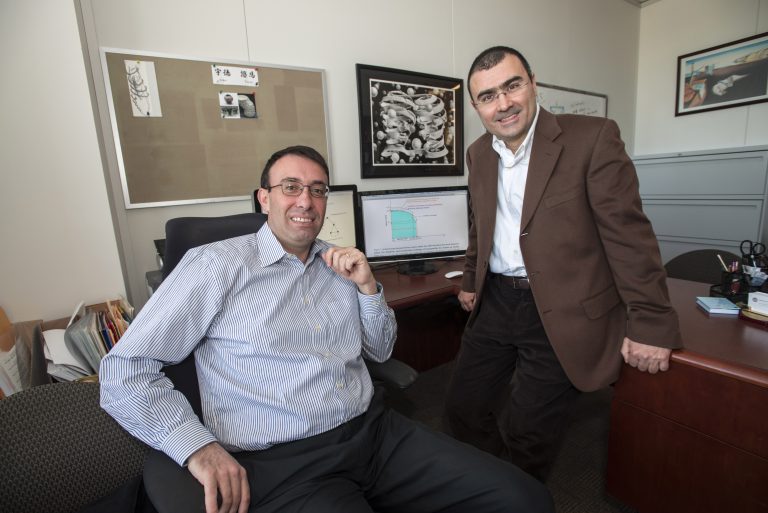
In July 2022, the world's first four-way cross liver transplant was performed.[1] Four people who needed a liver transplant but had no compatible donor swapped their donors and received compatible organs. This took place at the Liver Transplant Institute of İnönü University in Malatya, thanks to the cross transplant system developed by Tayfun Sönmez and Utku Ünver, economist members of the Science Academy.
You may wonder what economists have to do with liver transplantation; in the interview you will read below, Sönmez and Ünver tell the scientific adventure that led to the founding of this system.
Economics, "in its most general form, studies how scarce resources can be distributed most efficiently"[2] The resources in question may be monetary, but they can also be vaccines produced during the pandemic, university dormitory rooms, staff housing, donated organs, or quotas in university departments. In these allocations, money does not talk: even if you have money, you cannot get the housing you want or the kidney that will save your life. Such markets are called "matching markets".[3]
Lloyd Shapley, who built the theoretical foundations of matching markets, and Alvin Roth, a colleague of Sönmez and Ünver, were awarded the Nobel Prize in Economics in 2012. The prize covered not only the theoretical framework for analyzing resource allocation but also the actual redesign of real-world institutions.[4] The "Banu Bedestenci Sönmez Cross Transplant System" established in Malatya, named after Sönmez's late wife, is exactly this kind of economic institution design.
Listening to Sönmez and Ünver, I thought that what they described was a wonderful example of the "transdisciplinary" approach I have often heard about lately, which prioritizes combining scientific rigor and competence with social issues.[5] When working on a system that will save the lives of more people, is it more valuable to build the mathematically most efficient system, or to focus on a system that is applicable in the real world, that is, one that can convince decision-makers? The scientific value of the first is undoubtedly undeniable, but could the second approach be the only condition for improving the world?
The work of Sönmez and Ünver, which prioritizes bringing real solutions to social problems, has grown over the years into a comprehensive methodology. We will cover this methodology, which Sönmez calls "minimalist market design," in the next section.
NOTE: As of 22 December 2023, liver transplants have been performed in the "Banu Bedestenci Sönmez Cross Transplant System" through 13 two-way, eight three-way, four four-way and two five-way cross transplants.
Source:https://sarkac.org/2023/08/karaciger-nakillerinde-bir-devrimin-hikayesi/