Professor of multiple cross transplants: Prof. Dr. Sezai YILMAZ
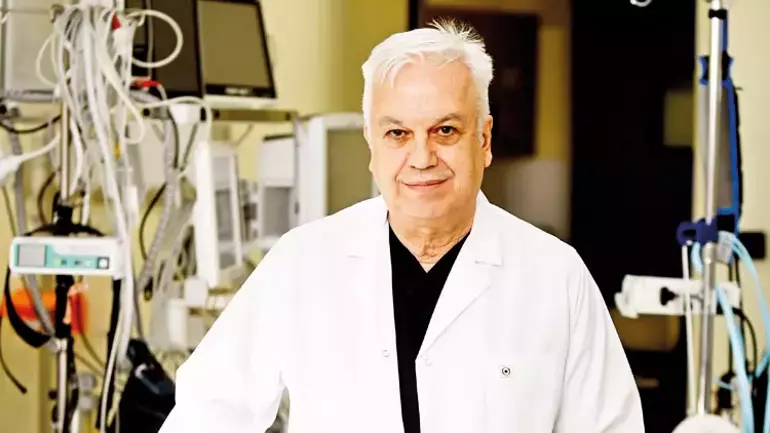
In recent years, world-class successes have been achieved at the Liver Transplant Institute of İnönü University, which is preparing to celebrate its 50th anniversary this year. In the seven-way cross liver transplants performed most recently last September, seven patients who had never met held on to life. At the head of the center is a name from Malatya's own soil: Prof. Sezai Yılmaz. We leafed through old albums with him and listened to his own story; we learned more closely about the 'liver', which he calls 'the engine of the body, an ocean', and the work being done…
The Liver Transplant Institute of İnönü University, which is preparing to celebrate its 50th anniversary this year... We are with Institute Director Prof. Sezai Yılmaz. First we make a short patient visit; two-year-old little Meryem Neva, 60-year-old Mr. Mehmet Sinan, 50-year-old Mr. Ahmet, himself a general surgeon, 20-year-old İpek who is expecting a baby… Until a while ago these people had never known one another, and now they have held on to life thanks to each other; they have become a family through the 'liver bond'. How did this happen? What exactly is done here? First let us get to know our guide, Prof. Dr. Sezai Yılmaz…
"The liver is an ocean! It is the engine of the body; it provides all the energy, produces vitamins and controls diabetes. It allows us to walk and move. Its operations are difficult because there are many vessels. It is hard to remove. It changes very easily with what we eat. In liver patients the proteins in the body are not formed and muscles waste away. People become so weak that they cannot even take out a comb and comb their hair. Today the biggest problem is fatty liver caused by obesity. The more weight you gain, the more prone to fat your liver is."
While preparing, as chief resident, to win the Ministry of Health's scholarship and receive liver transplant training in America… Now let us pause the professor's story for a moment and look at developments in the world. The medical developments related to the liver that Yılmaz wanted to work on were progressing slowly. The first transplant was performed in Denver in 1963 but was unsuccessful and caused great trauma. By the 1980s, work had regained momentum. Thomas Starzl, who performed the first transplant in Denver, made Pittsburgh the capital of this field. As this was happening in the world, his colleague gastroenterologist Prof. Fatih Hilmioğlu began working to establish a liver transplant center at İnönü University in Malatya and made an offer to the young chief resident Yılmaz: "I see very young people dying because they cannot access liver transplantation, and I am ashamed of it. Don't go to America, come to Malatya. Let's establish a center here together. We will send you to America afterwards."
MORE LIVING DONORS
After returning, they built the infrastructure and in 2002 performed the first liver transplant in Malatya in a 20-hour operation. He continues: "We were doing three or four liver transplants a year, but finding cadavers whose organs are donated is very difficult. In contrast, since our kinship ties are strong, living donors are common. In Europe it is the exact opposite; there is a lot of cadaveric organ donation, but because family ties are weak, finding a living donor is hard. In 2005 we started living-donor liver transplantation in Malatya. In 2007 we performed 54 and in 2008 153 liver transplants."
WE WORK WITH A NOBEL TEAM
Professor Sezai: "According to the European Liver Transplant Registry, we have been the center performing the most liver transplants in Europe and Türkiye since 2008. In 2019, with the encouragement of Prof. Şükrü Emre of Yale University, we performed a five-way living-donor liver transplant at the same time. Prof. Dr. Tayfun Sönmez and Prof. Dr. Utku Ünver from America reached out to us and said they had developed an application that matches incompatible donors. They were part of the team that won the Nobel Prize in 2012 for this work."
CROSS OPERATIONS
This program made it possible for patients who had never known each other to become a 'liver family'… Yılmaz: "Imagine your liver is diseased. The probability that a family member's liver is compatible with yours is one in three, but one that doesn't match you may match someone else. With this program we can match patients, donors and the liver characteristics sought. We performed the first cross operation in 2022. It was followed by three-way, four-way, five-way, six-way and most recently seven-way cross transplants. In two years we have been able to offer 45 percent more patients the chance of a liver transplant."